



The two ages of champagne – part 1. Ageing on lees
Much like we humans who go through different periods of life: youth, middle age and older years, there are different periods in the life of a bottle of champagne. Two important stages are called ‘ageing on lees’ and ‘bottle ageing’. An understanding of what happens during each of these phases and how they affect the champagne can be useful when you’re buying a bottle and when you’re deciding on the right moment to drink it.
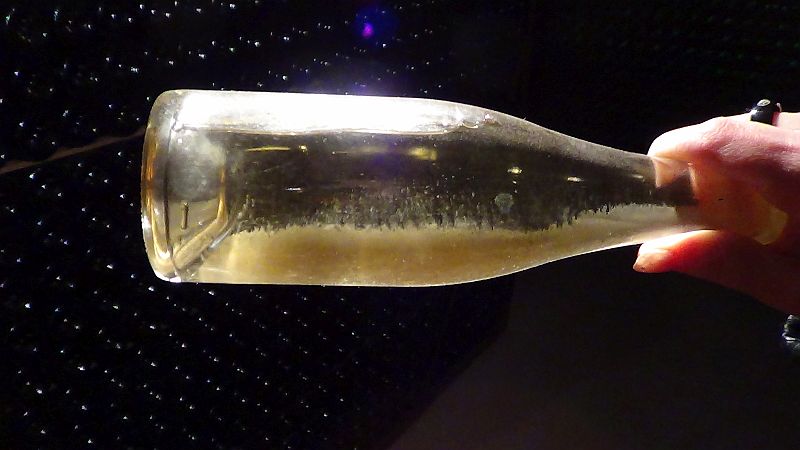 Ageing on lees refers to the time after the various wines have been blended by the champagne maker and put into bottles. Before the bottles are sealed a small amount of yeast and a small measure of sugar are added to produce the second fermentation inside the bottle during which the yeast cells are consumed by the fermentation and sink to the underside of the bottle where they form a sediment known as ‘the lees’.
At this stage, the bottles are sealed not with a cork but with a standard crown cap of the type that is used on bottles of beer and other drinks. This may sound very basic and low-tech, but that’s not entirely true.
The underside of the cap is lined with a thin membrane whose thickness and composition have been meticulously studied and selected to give a precise degree of permeability to the air, the interaction between the air and the wine in the bottle being a key factor influencing the rate of development of the wine.
 The last component of the cap is what is called the ‘bidule’ which when translated, means simply ‘whatchamacallit’ or ‘widget’. It’s a small plastic shape that is designed to catch the lees when the bottle is turned neck-down at a later stage of the champagne making process.
Like so many things to do with making champagne the time spent ageing on lees is regulated. The minimum duration of ageing on lees for non-vintage champagne is 15 months and 3 years for vintage champagne. A relatively short period of ageing on lees is suitable for bright, energetic champagnes designed for enjoying on casual and spontaneous moments of celebration, whilst longer ageing on lees produces more complex champagnes that are best appreciated with food or at other more relaxed and gentle moments.
During ageing on lees, the complex interactions between enzymes, amino acids and other chemical compounds promote the development of a multitude of aromas and flavours including the notes of patisserie and brioche that are often mentioned as the hallmarks of good quality champagne.
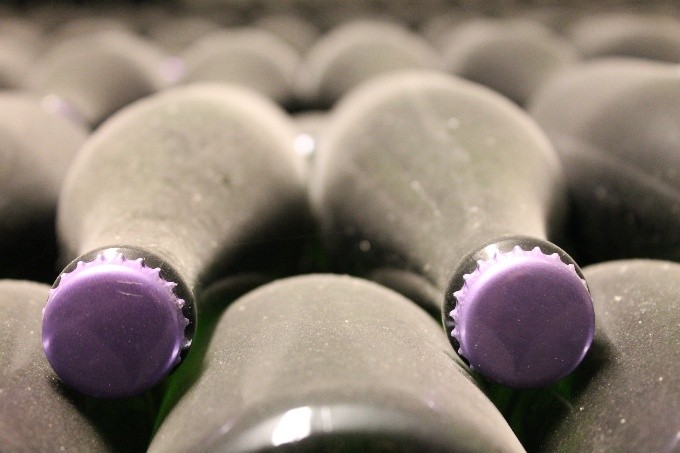 From that perspective it makes sense to leave the champagne to age on lees for as long as possible, but every bottle that is ageing in the cellars is a bottle not yet sold and they have to be financed, so a balance has to be found between the need to generate revenue by selling the bottles and the need for the champagne to be of high quality.
Most champagne houses will aim to have an average of just over three years’ worth of stock in the cellars. If the average age goes much above that to say, 4 years, the cost of financing the stock can become a problem whilst at the other end of the scale, if the average age of the stock falls much below about 3 years that suggests that there is a shortage of stock and the champagne is perhaps being sold too young.
Before buying a bottle of champagne it can be useful to ask how long the bottle has been aged on lees. Most mainstream, non-vintage brands will have been aged on lees for between 2 and 3 years which is standard practice and not worth drawing the consumer’s attention to. On the other hand, if the answer to your question is 4 or 5 years or longer, that’s an indication that the bottle you are considering buying may well be a little special.
Another concept related to ageing champagne is called ‘bottle age’ and I’ll write again soon about that.
Jiles Halling
