Jiles's Blog

Who Am I?

17 years spent living and working in Champagne has allowed Jiles to build up a vast amount of knowledge about all things bubbly as well as a very extensive network of contacts, especially amongst the smaller and less well-known champagne makers whose champagnes will probably amaze you with their quality and diversity.

A job as area manager for Asia and Australia with Moët et Chandon was what first drew Jiles to Champagne after completing an MBA in Luxury Brand Management at ESSEC, a prestigious business school just outside Paris.

After nearly 9 years at Moët Jiles moved back to the UK where he started one of the first online businesses promoting and selling grower champagnes,

However the draw of ‘The King of Wines and the Wine of Kings’ once again proved irresistible and another 8 year stay in Champagne was the result. During this second stay in Champagne Jiles worked with the Syndicat Général des Vignerons de Champagne as an accedited consultant for small, independent champagne makers before setting up his own consultancy.

Jiles now spends his time between England and Champagne.and puts his knowledge and contacts to work helping wine lovers everywhere learn more about champagne and helping businesses and individuals to create their own private champagne brand.

He is the author of two books on champagne, several concise guides to champagne  and is the creator of an online champagne study course called My Champagne Expert


Luxury where it’s least expected

Luxury where it’s least expected

Sometimes luxury can be found in the simplest of things. Not the ones that are the most expensive, nor the most exclusive, nor the most fashionable, but rather in the experiences that are spontaneous, that live in one’s memory, that feel ‘authentic’ and that can be shared.

The debate about which glasses are ‘the best’ for drinking champagne is a case in point.

Opinions range from the sauce shaped glass that was popular in the heyday of Hollywood in the 1950s and 60s ( take a look at the ‘Here’s to Your Kid’ scene in Casablanca), to the tall, flute shaped glasses which allow you to watch the bubbles rise up the glasses and concentrate the aromas as you sniff the wine and more recently to a wider, white wine style glass advocated by professional sommeliers and other wine aficionados because they allow you to agitate the champagne and appreciate, to best advantage, all the complex aromas in the wine.

Styles may come and may go but some things endure throughout the generations and humble though they may be, they have an undeniable authenticity and an appeal that is the inverse of their appearance.

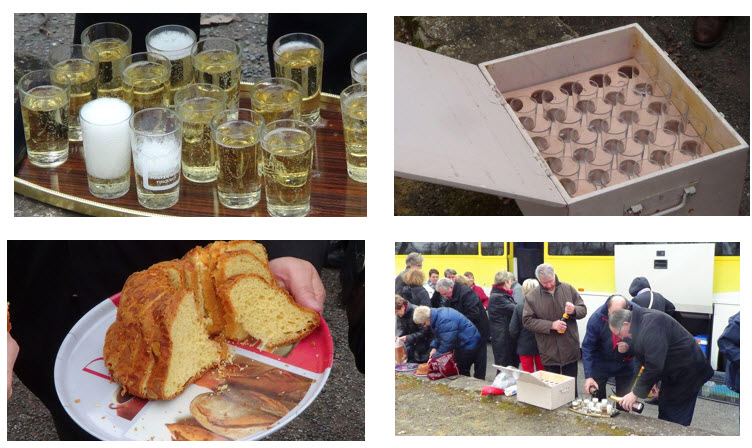
Take the humble Blida glass that is ubiquitous in Champagne at many an impromptu celebration and low-key occasion such as a village fair or school fete (yes, really; champagne is served a school fetes!)

BLIDA selection

No stem to hold the glasses decorously, and do be careful not to agitate the champagne in the glass – you will certainly spill it. Definitely not the best design for appreciating the finer points of the wine, but what fun! 

It all makes for a ‘Grand Day Out’ as Wallace and Gromit might say.

You can even get a somewhat inelegant, but highly practical carrying case to take with you on your next coach trip.

To round off the fun of the occasion, remember that nothing goes quite as well with champagne as home-made brioche.

Of course, everyone has their own notion of luxury, but the Blida glass has a style all of its own which is all about enjoying life in every moment.

What simple things do you consider to be luxurious despite their simplicity?


The Two Ages of Champagne – part 2

The Two Ages of Champagne – part 2

The previous article (cunningly entittled The Two Ages of Champagne – part 1looked at the life of a bottle of champagne up until the time it is disgorged and the lees removed. Unsurprisingly, that period is referred to as ‘ageing on lees’

When the lees are removed during the disgorging process the metal crown cap which has been used to seal the bottle is also removed and replaced by the cork and the wire cage that are so closely associated with our image of champagne.

From this point onwards the period of bottle ageing starts and it can last for a very long time until the bottle is finally opened and drunk.

On the other hand, bottle ageing can be quite short because a bottle of champagne is ready to drink almost as soon as it has been disgorged, but in practice that rarely happens for a number of reasons.

First, the bottles need a short time to settle after the ‘trauma’ they suffer during disgorgement.

Consequently, champagne makers prefer to wait several weeks or months before the bottles are made available for sale.  After that a few weeks, or even months, go by during transport and distribution before the bottle finds its way to the final consumer. 

After purchase some people open the bottle almost immediately and others prefer to wait a little longer. In fact, if the storage conditions are good, top-quality champagne can be kept for decades but what happens to the champagne if you do that?

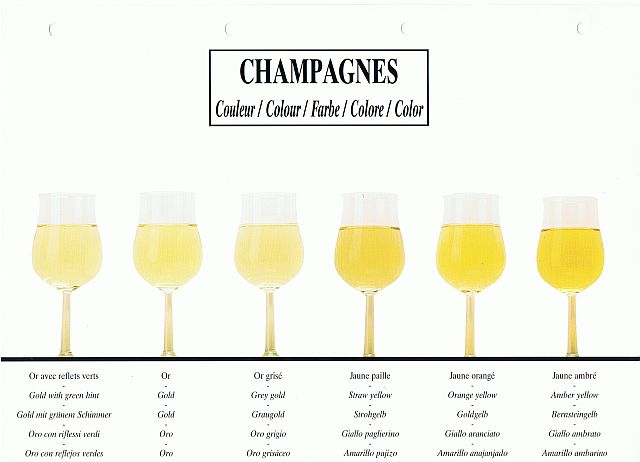
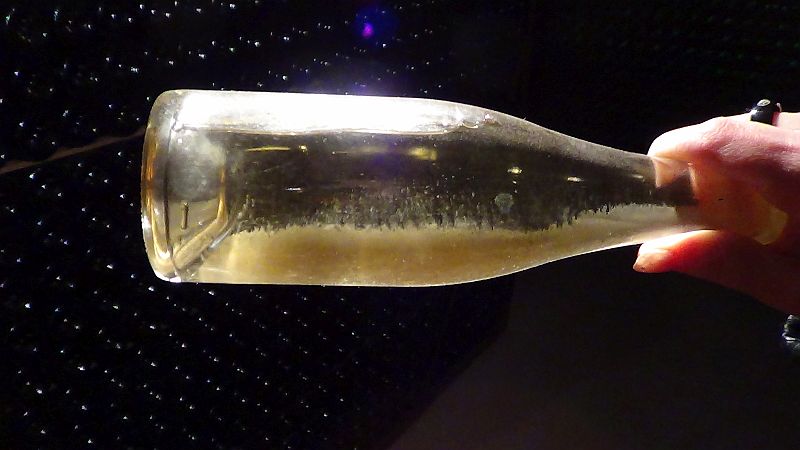
Colours of champagneIf you keep your bottle of champagne for any considerable length of time, it will gradually lose a little of its sparkle over the course of many years, and the colour will evolve from the youthful tones of pale yellow and gold towards the darker hues of copper and old gold.  
Similarly, the flavour profile will evolve from the bright, floral character of younger champagnes to the deeper, richer flavours that extra age confers bringing with it hints of honey, spices and caramel.

These changes in no way indicate that the quality goes down – on the contrary, if you like a more evolved style, old champagnes can offer unforgettably delicious wine tasting experiences. 

How long you keep your champagne after you buy it is entirely up to you and depends on what style of champagne you prefer but it can be difficult to know exactly when the bottle was disgorged and hence how long the period of bottle ageing has been.

Of course, if you are interested in such things, you can make a note of when you bought the bottle and when you open the bottle, but even if you do that you still have no reliable knowledge of when the bottle was disgorged and how much time passed before you bought it. At least that is the case with most bottles and brands that you will find on the market.

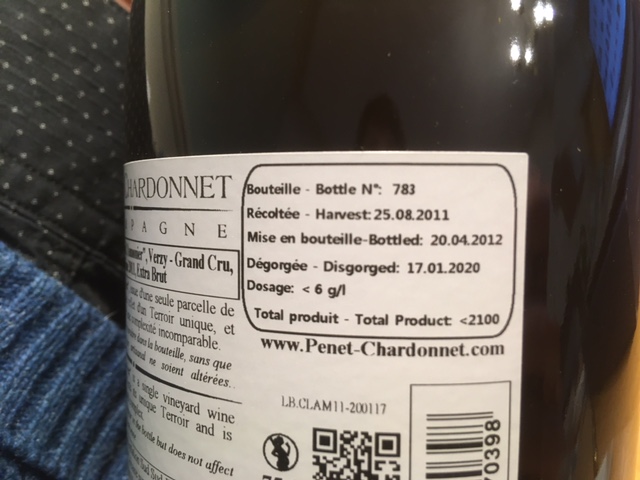
Back label 1To get around this problem and to assist anyone who wants to know more about the champagne they are drinking, an increasing, but regrettably still small, number of champagne makers print the disgorging date on the back label of the bottle.
If the champagne maker provides you with even more information such as you can find on the back label shown here, you have a complete picture of the life of each bottle.

Many people would consider this level of detail to be a bit ‘nerdy’ and not every one wants or needs this, but it does give you a real insight into champagne that many people find fascinating and since you’re reading an article all about champagne, perhaps you’re one of those people.

Happy tasting

The Two Ages of Champagne, part 1

The two ages of champagne – part 1. Ageing on lees

Much like we humans who go through different periods of life: youth, middle age and older years, there are different periods in the life of a bottle of champagne. Two important stages are called ‘ageing on lees’ and ‘bottle ageing’. An understanding of what happens during each of these phases and how they affect the champagne can be useful when you’re buying a bottle and when you’re deciding on the right moment to drink it.

Ageing on leesAgeing on lees refers to the time after the various wines have been blended by the champagne maker and put into bottles. Before the bottles are sealed a small amount of yeast and a small measure of sugar are added to produce the second fermentation inside the bottle during which the yeast cells are consumed by the fermentation and sink to the underside of the bottle where they form a sediment known as ‘the lees’.
At this stage, the bottles are sealed not with a cork but with a standard crown cap of the type that is used on bottles of beer and other drinks. This may sound very basic and low-tech, but that’s not entirely true.

The underside of the cap is lined with a thin membrane whose thickness and composition have been meticulously studied and selected to give a precise degree of permeability to the air, the interaction between the air and the wine in the bottle being a key factor influencing the rate of development of the wine.

Crown cap and BiduleThe last component of the cap is what is called the ‘bidule’ which when translated, means simply ‘whatchamacallit’ or ‘widget’. It’s a small plastic shape that is designed to catch the lees when the bottle is turned neck-down at a later stage of the champagne making process.
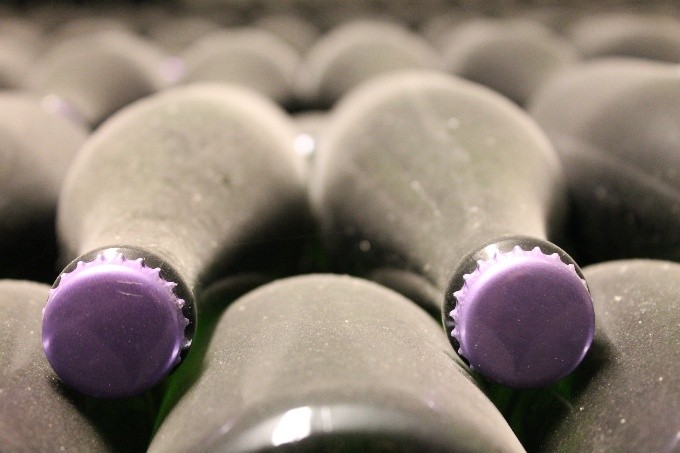
Like so many things to do with making champagne the time spent ageing on lees is regulated. The minimum duration of ageing on lees for non-vintage champagne is 15 months and 3 years for vintage champagne. A relatively short period of ageing on lees is suitable for bright, energetic champagnes designed for enjoying on casual and spontaneous moments of celebration, whilst longer ageing on lees produces more complex champagnes that are best appreciated with food or at other more relaxed and gentle moments.

During ageing on lees, the complex interactions between enzymes, amino acids and other chemical compounds promote the development of a multitude of aromas and flavours including the notes of patisserie and brioche that are often mentioned as the hallmarks of good quality champagne.

Ageing on crown capFrom that perspective it makes sense to leave the champagne to age on lees for as long as possible, but every bottle that is ageing in the cellars is a bottle not yet sold and they have to be financed, so a balance has to be found between the need to generate revenue by selling the bottles and the need for the champagne to be of high quality.
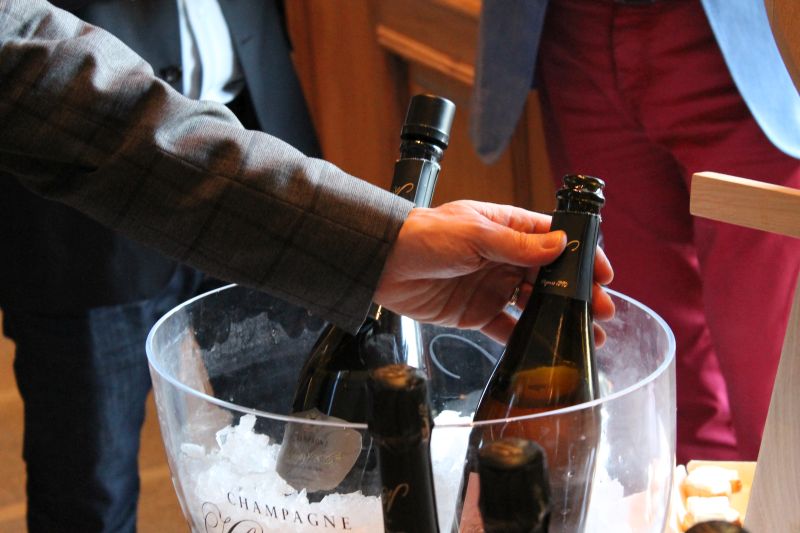
Most champagne houses will aim to have an average of just over three years’ worth of stock in the cellars. If the average age goes much above that to say, 4 years, the cost of financing the stock can become a problem whilst at the other end of the scale, if the average age of the stock falls much below about 3 years that suggests that there is a shortage of stock and the champagne is perhaps being sold too young.

 Before buying a bottle of champagne it can be useful to ask how long the bottle has been aged on lees. Most mainstream, non-vintage brands will have been aged on lees for between 2 and 3 years which is standard practice and not worth drawing the consumer’s attention to. On the other hand, if the answer to your question is 4 or 5 years or longer, that’s an indication that the bottle you are considering buying may well be a little special.

Another concept related to ageing champagne is called ‘bottle age’ and I’ll write again soon about that.

Jiles Halling

What’s all the fuss about Dosage?

What’s all the fuss about Dosage?

One of the things I see and hear at champagne tastings, much to my bewilderment, is what seems to me to be an obsession amongst some wine writers, wine journalists and others in the trade, about the ‘dosage’ – the amount of sugar that has added to the wine to adjust the level of sweetness.

‘What’s the dosage’? is often the first question asked of the champagne maker even before the wine has been tasted and, in my view, the question is almost always irrelevant.

At a tasting eventThe questioner is not looking for a broad category of sweetness such as Brut, but rather a precise number in terms of grams of sugar per litre of wine.
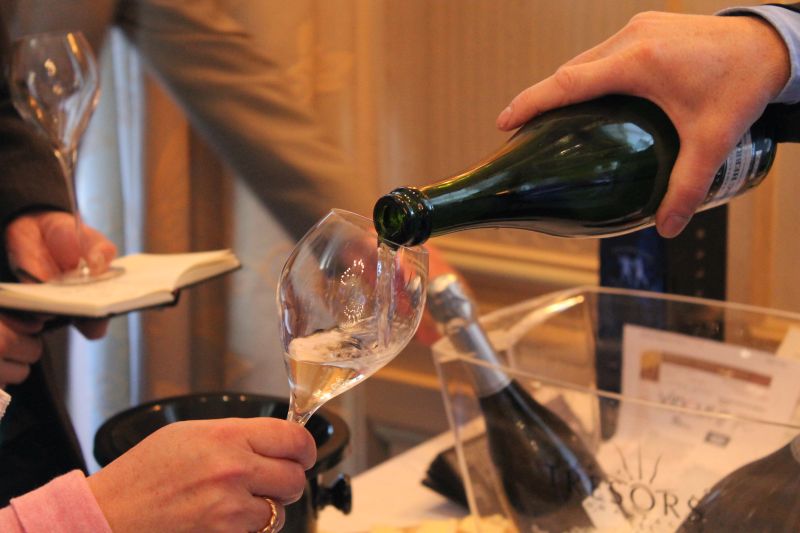
Asking this question – before you’ve even tasted the wine - suggests to me that the questioner is just using ‘dosage’ as a buzz word to convey the impression of some expert knowledge about champagne, when, I feel, it does the opposite: a misunderstanding of the purpose of dosage.

Many decades ago, there was a lot more low-quality champagne on the market, and the tendency was to use dosage as a means of masking the poor quality of young wines that really needed longer aging to acquire more balance.

Then, as now, the majority of champagne was classified as Brut. This is a broad category that covered champagne with between 6 and 15 grams of sugar per litre (gr/l) of added sugar.

Although the band was subsequently reduced to 6 – 12 gr/l, that still leaves a lot of leeway to vary the dosage and still remain within the Brut category. In fact, it’s quite possible that one champagne in the Brut category can have twice as much sugar as another champagne that is also in the Brut category. So the categorisation was vague and potentially confusing.

That being the case, it does make sense to ask for more precise detail about the exact dosage in gr/l, but not before the champagne has even been tasted.

TastingChampagne makers – at least the good ones who are likely to be the only ones exhibiting at a trade tasting - don’t add sugar willy nilly just for the sake of it. They adjust the dosage so that it is at the optimum level to complement the blend of wines they have chosen. The key factor is the harmony between the wine and the dosage. If the champagne maker has got this balance right, the champagne with be agreeable on the palate and the dosage will not generate any remark whatsoever because it will seem to be the only and the obvious level of sweetness for that particular champagne.

In my view, he question about the exact amount of sugar doesn’t even come into the discussion unless, on tasting, the champagne seems unbalanced. At that point the issue of the dosage does become relevant, and it is pertinent to enquire about the precise level of dosage, but only after the initial tasting of the champagne.

More recently, it seems to me that a few things have happened which have led to a sort of fixation on the issue of sugar content that I have noticed at some champagne tastings.

  • Society as a whole has become more aware of the high (unhealthily high?) levels of sugar in many of the foods on the market.
  • It’s become trendy to insist that low dosage champagnes are inherently superior and generally more desirable, when in reality I don’t believe this is necessarily the case at all.
  • The skills and technical knowledge of champagne makers have improved allowing them to create champagnes that require less added sugar which are then perceived (and perhaps deliberately promoted) as more ‘natural’.

The combination of these three factors has contributed to the availability and perceived desirability of champagne with low-dosage that fall into the Extra Brut or Brut Zero categories.

Nevertheless, the fact remains that a champagne maker will still select the dosage that he or she deems to be perfect for the blend they have created and the precise amount in gr/litre is only relevant if the balance between the champagne and the dosage appears to be out of balance and this can only be assessed after first tasting the champagne.

In and any case, my view is that there are very few champagne drinkers who can tell the difference between say, a dosage of 5 gr/l and one of 2 gr/l. The use of the broader categories, Brut Zero, Extra Brut and Brut, is adequate for all normal purposes and any finer distinction is of more interest to the wine trade than to all but a small handful of consumers and does not warrant the attention it gets.

But perhaps I’ve got this all wrong. Do let me know what you think.

This email address is being protected from spambots. You need JavaScript enabled to view it.

News from Champagne that you may not find elsewhere

JANUARY 2026

A selection of less well-known news stories from Champagne

Since we are still only a couple of weeks into 2026, I hope it’s not too late to wish you and yours a very Happy New Year.

Since we share a common interest in champagne, I thought you might be intrigued by this light-hearted selection of news from Champagne that you probably won’t find anywhere else.

I hope you enjoy the read and do feel free to let me know if you have any questions or comments

“Welcome to the vineyards of Verzy. The most beautiful in all of Champagne.”

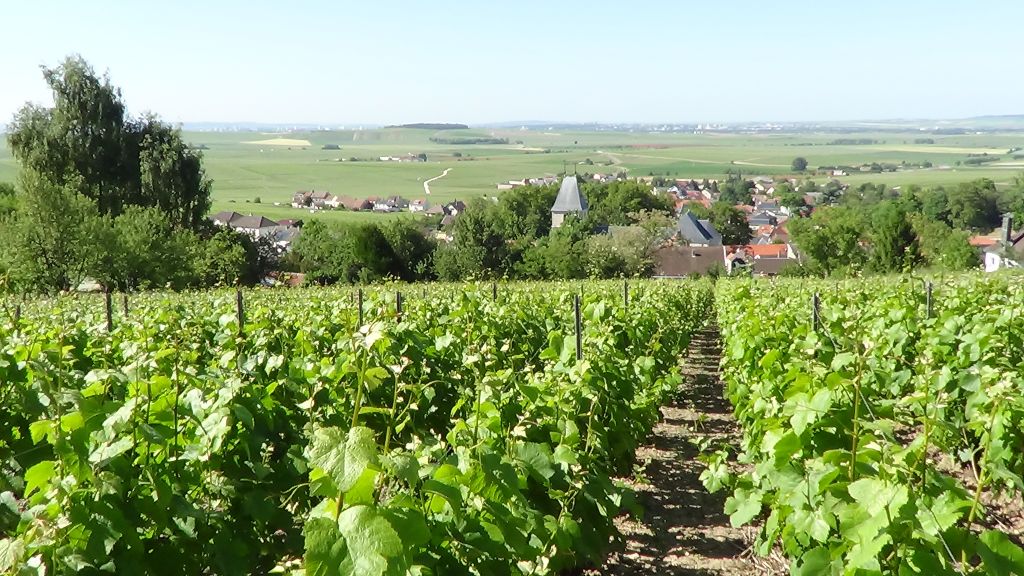
There are some 320 villages in Champagne, and I imagine that the inhabitants of each one feel that their village is the best. Whatever the truth of the matter, Verzy must have a claim to be at the top of the list.

Of course, I’m biased because I lived there for 20 years or so, but I am not alone in my opinion.

The quotation above is from the opening lines of the film Widow Clicquot, spoken by Monsieur Clicquot to his young bride — before she tragically became a widow and went on to make history.

Widow Clicquot

If you haven’t seen the film, you’re not alone. It never enjoyed wide distribution, though it can be found on several online platforms. You can hear those famous opening lines in the trailer here:
https://www.imdb.com/title/tt3234122/

I wouldn’t say it’s a great movie but it’s an interesting tale for anyone interested in champagne.

Curiously, the film was not actually shot in Verzy, nor even in Champagne for the most part. A missed opportunity, I think.

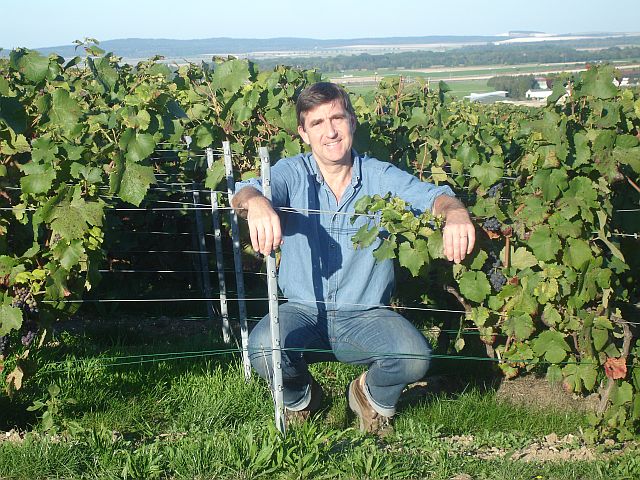
Veuve Clicquot still owns vineyards in Verzy and there’s one particular plot that is reserved for the production of La Grande Dame, Veuve Clicquot’s top-of-the-range cuvée. This is a picture of me standing in that same plot on an Autumn day when the vines looked especially beautiful.

In the vineyards

The plot has another claim to fame because it is home to individual vine plants dedicated to the winners of the Bold Women Award.

Each year, a little orange plaque bearing the name of the winning lady is fixed to a specific vine and now that the award has been going for 40 years, you can see row upon row of them.

VCP plaques

Two More Great Ladies Remembered

Last month marked the passing, at the age of 91, of Brigitte Bardot — an icon of French beauty and style, and a long-time friend of several champagne houses. She had a particular affiliation to Champagne Besserat de Bellefond and was a muse to fashion designers, and indeed to an entire era.

BB MM

Another legendary woman of that time was Marilyn Monroe, and 2026 marks the 100th anniversary of her birth. Though not French, she famously adored champagne — allegedly filling her bath with Dom Pérignon. Like Bridgitte Bardot, Marilyn was associated with many champagne houses and this year Piper Heidsieck  will be releasing a special cuvée in her honour later this year.

Two very different women, united by glamour, legend… and champagne.

A Date for Your December Diary ?

Every mid-December, the Avenue de Champagne in Épernay transforms for Les Habits de Lumière — “Dressed in Lights”.

Habits de Lumiere sign

Habits de Lumiere scenesIt’s a feast for the senses: live music everywhere, fantastical illuminated floats, spectacular sound-and-light shows, and, naturally, all the along the 500 yard length of the avenue, champagne flowing freely as the great houses open their doors for tastings and pop-up bars : Moët & Chandon, Pol Roger, Perrier-Jouët, De Venoge, Boizel, Esterlin and A. Bergère, to name just a few.

It’s unforgettable. I doubt you will ever have seen so much champagne being poured in one place on one occasion — but two pieces of advice:

  • Book accommodation early (very early) and be sure to check the exact dates, they vary slightly each year.
  • Be ready for crowds.

The attendance figures for 2025 are not yet available but over the two days of the event in 2024, around 67,000 people attended. Don’t expect fewer in 2026.

Champagne Games

Looking for a gift idea for a champagne lover — or perhaps a treat for yourself and your family?

Games

Two new champagne-themed board games have just been released. One is a Champagne edition of Monopoly. The other, intriguingly titled AOC (Age of Champagne), puts you in charge of your own champagne house: securing grape supplies, managing blends, and balancing production with sales and marketing.

If you’ve ever wondered what it really takes to run a champagne business, this game offers a surprisingly insightful (and entertaining) glimpse behind the scenes.

Let me know if you’d like more details.

That’s all for this bulletin. I’ll write again from time to time when there’s more curious and slightly left-field news to bring you.

Meanwhile, all the best for 2026. ????

JH January 2026