



The Two Ages of Champagne – part 2
The previous article (cunningly entittled The Two Ages of Champagne – part 1) looked at the life of a bottle of champagne up until the time it is disgorged and the lees removed. Unsurprisingly, that period is referred to as ‘ageing on lees’
When the lees are removed during the disgorging process the metal crown cap which has been used to seal the bottle is also removed and replaced by the cork and the wire cage that are so closely associated with our image of champagne.
From this point onwards the period of bottle ageing starts and it can last for a very long time until the bottle is finally opened and drunk.
On the other hand, bottle ageing can be quite short because a bottle of champagne is ready to drink almost as soon as it has been disgorged, but in practice that rarely happens for a number of reasons.
First, the bottles need a short time to settle after the ‘trauma’ they suffer during disgorgement.
Consequently, champagne makers prefer to wait several weeks or months before the bottles are made available for sale. After that a few weeks, or even months, go by during transport and distribution before the bottle finds its way to the final consumer.
After purchase some people open the bottle almost immediately and others prefer to wait a little longer. In fact, if the storage conditions are good, top-quality champagne can be kept for decades but what happens to the champagne if you do that?
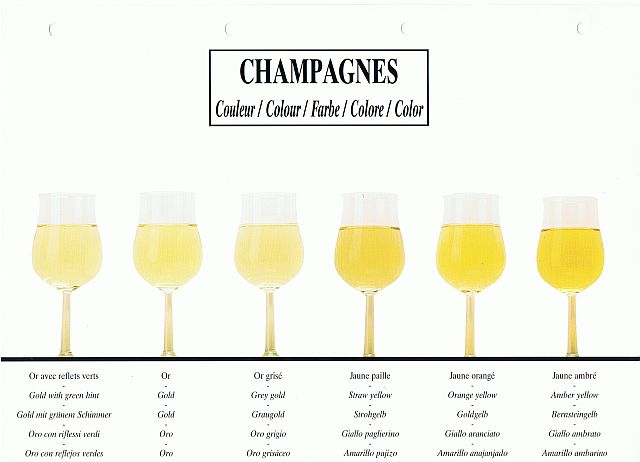 If you keep your bottle of champagne for any considerable length of time, it will gradually lose a little of its sparkle over the course of many years, and the colour will evolve from the youthful tones of pale yellow and gold towards the darker hues of copper and old gold.
Similarly, the flavour profile will evolve from the bright, floral character of younger champagnes to the deeper, richer flavours that extra age confers bringing with it hints of honey, spices and caramel.
These changes in no way indicate that the quality goes down – on the contrary, if you like a more evolved style, old champagnes can offer unforgettably delicious wine tasting experiences.
How long you keep your champagne after you buy it is entirely up to you and depends on what style of champagne you prefer but it can be difficult to know exactly when the bottle was disgorged and hence how long the period of bottle ageing has been.
Of course, if you are interested in such things, you can make a note of when you bought the bottle and when you open the bottle, but even if you do that you still have no reliable knowledge of when the bottle was disgorged and how much time passed before you bought it. At least that is the case with most bottles and brands that you will find on the market.
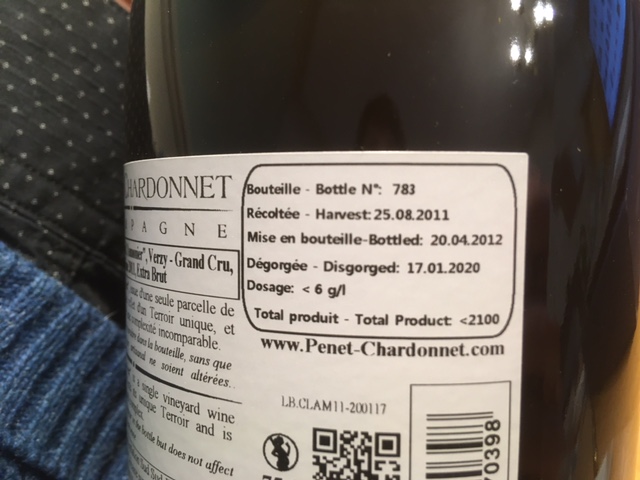 To get around this problem and to assist anyone who wants to know more about the champagne they are drinking, an increasing, but regrettably still small, number of champagne makers print the disgorging date on the back label of the bottle.
If the champagne maker provides you with even more information such as you can find on the back label shown here, you have a complete picture of the life of each bottle.
Many people would consider this level of detail to be a bit ‘nerdy’ and not every one wants or needs this, but it does give you a real insight into champagne that many people find fascinating and since you’re reading an article all about champagne, perhaps you’re one of those people.
Happy tasting
