




Some of the consequences are obvious and common to all sorts of industries:
- employees unable to come to work,
- customers cancelling orders,
- cash running out and
- activity grinding to a halt.
 More specifically, in Champagne a special derogation has been given to vineyard workers so that they can tend the vines. Without this essential work now and in the coming weeks, come September the harvest itself would be put at risk. Fortunately, it’s easy to maintain social distancing in the vineyards and most people work on their own anyway.
Another worry that already upon some champagne makers and which is looming ever closer for others, is what to do about bottling.
Many vignerons, especially the smaller ones, call upon a contractor to bring in and set up the bottling equipment. Since it is only needed for two or three days a couple of times per year, it’s not worth the vigneron investing in the equipment his or herself. At the moment however the contractors aren’t working or can’t work. But the champagne still needs bottling.

It won’t spoil if it’s left a few more weeks or months on lees, but everyone is hoping that in a few months’ time things will be getting back to something like normal and that they will be able to start selling again. To do that however they have to have the bottles ready and you can’t just turn on a tap and produce that stock because, after bottling, the champagne needs to rest for several weeks or months before being released for sale. So, the window for getting the bottling done is getting ever smaller if the producers are to be ready for the recovery when it comes.
So much for the immediate worries, although there are many others I haven’t mentioned, but what about the longer-term impact of corona virus?
As some wise person once said, ‘It’s difficult to predict, especially about the future’, so any ideas can only be speculation, but a couple of things are likely to be affected
This year’s harvest.
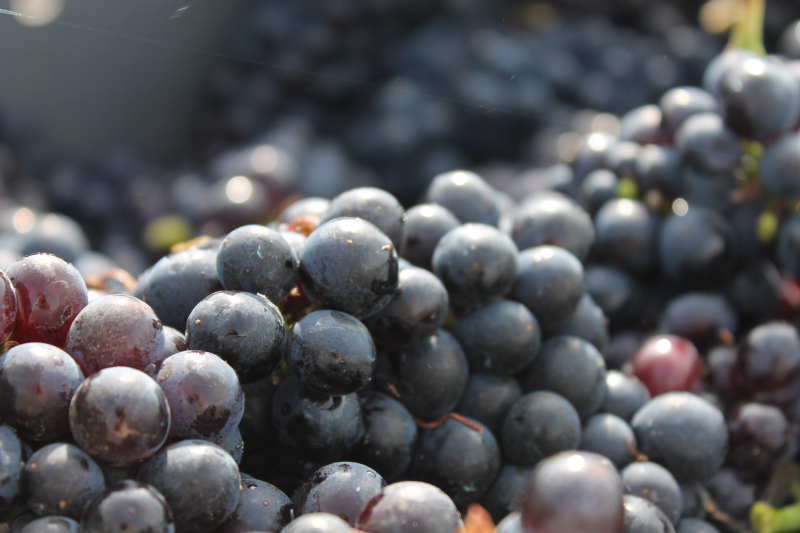 With sales taking a big hit at the moment, it’s likely that a large harvest will not be needed this year. The big buyers (the négoces) will have adequate stock in their cellars to meet demand when the markets get going again and won’t want to buy as many grapes as they would do in a normal year.
That’s potentially very bad news for many grape growers and champagne houses who rely on selling a significant proportion of their harvest to the big houses. The livelihood of these, usually smaller, growers depends on there being a healthy balance between the volume they sell and the price per kilo they get paid. If either one is out of whack, they could face serious problems.
So, what about the other side of the equation: the price of grapes?
If the demand for grapes goes down this year the price per kilo will probably go down as well, or at least not increase. On the one hand that might be seen as a good thing because the price of grapes in Champagne is notoriously high - between 6-7 euros per kilo and sometimes even more, but falling prices are a problem for those who sell grapes.
It’s also not beyond the bounds of possibility that to bring in some much-needed revenue that the growers might accept even lower prices from buyers in a position of strength.
Whilst none of this is certain, what does seem inevitable is that those in a weak financial position now will be under even more pressure come the end of the year.
Will this mean some growers and perhaps some houses going out of business? Perhaps.
Will some small operators be obliged to sell their vineyards, and will it be the big brands with resilient finances that snap them up? More than likely.
What will that do to the balance of power between small operations who traditionally own the majority of the land and the large operations who already control the lion’s share of sales and who are always looking to buy more vines?
For the time being there are only questions and no sure answers, but the effects of corona virus on Champagne are likely to be felt for months if not years to come.
 Instead of working outside, for many champagne makers February is a time to taste and evaluate the wines from last year’s harvest and to address the complex task of blending. In larger establishments blending may involve dozens or hundreds of bottles and a whole team of oenologists all taking notes and making a contribution to the final decisions.
  Louis Roederer, Charles Heidsieck and Pol Roger were named and the No. 1, 2 and 3 most admired champagne brands by Drinks International
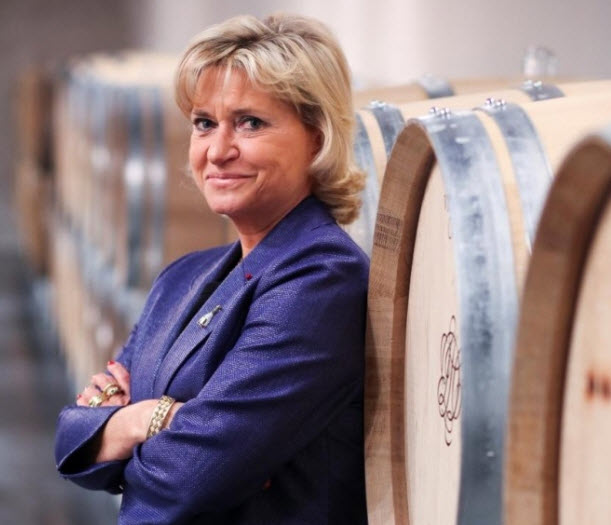 Carol Duval Leroy, head of the eponymous Champagne house, is certainly one.
 (picture)
 Claude Cazals – Delphine Cazals
 Laureen Baillette ,
 Behind all the tasting notes, the wine competitions, the food pairing and all the wonderful occasions that punctuate the year in Champagne, it’s important to remember that, when all is said and done, champagne is a business.
 Perhaps it’s because of the associations with those, apparently, glamourous times in the past that the coupe glass has a certain nostalgia attached to it: there’s nothing to match coupe glasses for building a champagne pyramid and to this day the coupe is still regarded as the perfect glass for many cocktails. You only have to look at the Moet Golden Hour glass used at this year’s Golden Globe awards.
 a coincidence, but an intriguing one, that the real boom in Champagne sales, 1960 – 2000, coincided with the popularity of the flute glass). Anyway, one might have expected the popularity of the flute to be unchallenged for many a year yet, but recently the preeminent position of the flute is coming under threat.
 However, when we take a closer look at this trend and ask who is it that is calling for the flute to be done away with and why, it reveals a sort of identity crisis that Champagne has perhaps got itself into and which needs very careful handling by those who influence the image and reputation of Champagne.
 qualities as a gastronomic wine to be matched with a wide variety of foods and served during, and perhaps even throughout, a meal.