Jiles's Blog

Who Am I?

17 years spent living and working in Champagne has allowed Jiles to build up a vast amount of knowledge about all things bubbly as well as a very extensive network of contacts, especially amongst the smaller and less well-known champagne makers whose champagnes will probably amaze you with their quality and diversity.

A job as area manager for Asia and Australia with Moët et Chandon was what first drew Jiles to Champagne after completing an MBA in Luxury Brand Management at ESSEC, a prestigious business school just outside Paris.

After nearly 9 years at Moët Jiles moved back to the UK where he started one of the first online businesses promoting and selling grower champagnes,

However the draw of ‘The King of Wines and the Wine of Kings’ once again proved irresistible and another 8 year stay in Champagne was the result. During this second stay in Champagne Jiles worked with the Syndicat Général des Vignerons de Champagne as an accedited consultant for small, independent champagne makers before setting up his own consultancy.

Jiles now spends his time between England and Champagne.and puts his knowledge and contacts to work helping wine lovers everywhere learn more about champagne and helping businesses and individuals to create their own private champagne brand.

He is the author of two books on champagne, several concise guides to champagne  and is the creator of an online champagne study course called My Champagne Expert


WORKING WITH DISTRIBUTORS

WORKING WITH DISTRIBUTORS

At some point in the life of your champagne brand, probably sooner than you imagine, you will want to work with a distributor who can get your brand into new outlets, increase brand awareness and drive sales.

However, a distributor who is effective and successful will be approached by dozens of brands also presenting their product and looking for a distribution partner. The competition will be intense so your objective is to make it as easy as possible for the distributor to say Yes to you.

In part 1 below are a few guidelines about how to present your brand and in the second part of the article you’ll find a few suggestions about how to work effectively with a distributor once you have secured an agreement.

Part 1 - Pitching

Sales pitch


Timing

In almost all countries the end of the year is the key period for sales and distributors will start planning for that crucial period many months in advance. Springtime is therefore a good time to present your brand to distributors. By summer it will be too late because they will have already made their decisions about which brands they want in their portfolio, and it will be too late to change that until the following year brings a new round of discussions.

Reasons why

You may be absolutely convinced that every aspect of your brand is outstanding and that it will be easy for a distributor to sell, but you will need to put yourself in the shoes of the distributor and understand what he or she is looking for.

Why are you contacting the distributor?

Do your research about each distributor and explain why would your brand be a good fit for them.

Does the distributor already have a champagne in the existing portfolio?

If so, why would they want another champagne?

Does your brand address a different market segment, does it fit into a different price bracket, what will make it attractive to the distributor?

If the distributor does not have a champagne in the existing portfolio, why should they take on your brand?

Is there an opportunity that has ben overlooked?

What is that opportunity and how big an opportunity is it?

Bring something to the table

It will be easier to persuade a distributor of the merits of your brand if you have already secured some listings, so start by prospecting in your local area and approaching bars, restaurants and retailers to get some initial sales.

 If you can show the distributor a list of existing accounts that will immediately bring in revenue for them, that will lend weight to your claims that there is a market for your brand.

Training

Always offer to train the distributor’s sales force about your product.

When a salesperson visits an outlet, he or she may only have a very few minutes to speak with the customer. It is vital therefore that the salesperson can speak concisely and confidently about your brand in the short time available.

You need to make sure that every salesperson knows two or three key points about your brand that will capture the customers attention. To do that the sales force needs to be trained.

Motivation

Every salesperson likes to be recognised and rewarded for their efforts.

Consider offering some incentive for the most successful salesperson of the month, or some similar programme.

Know your numbers

When all is said and done, no matter how good the product, if the distributor cannot make an attractive profit from selling it, the product will fail.

You will need to present cost prices, suggested retail prices and expected margins for the distributor.

Part 2 – Details of an agreement and ongoing collaboration

Contract image

Distribution agreements are legal undertakings and once entered into, it can be difficult and very costly to withdraw from them. Therefore, great care should be taken to study the content of the agreement, and it is advisable to seek advice from a qualified legal expert before signing any agreement.

Some points worth particular attention are:

The length of the agreement

It is prudent to have an initial trial period, say 1 year, at the end of which results can be assessed and, if necessary, the agreement ended without additional cost.

It’s a good idea to discuss and agree sales targets for the trial period, which if not met, would give legitimate reason to terminate the agreement.

Avoid giving to the distributor the exclusive right to distribute your brand, unless the duration of the agreement is fixed and the means of exiting the agreement are made clear before you sign the agreement.

Your work is not finished when you have signed an agreement with a distributor. Close and regular communication between you and the distributor is needed in the months and years ahead.


Sales graph

Review sales regularly with the distributor. Better still, ask for a monthly depletion report from the distributor. This information not only helps you see how sales are growing, it will also signal any potential problems that need attention before they become serious.

 If sales drop significantly to the point where the distributor loses confidence in your brand, the distributor may be tempted to sell off any remaining stock at bargain prices which does no good at all to the image of your brand. This type of situation is to be avoided and one way to do this is to keep a constant eye on depletions.

Just as important, the monthly depletion reports allow you to monitor stock levels and plan new orders from France.

Distributors may not be willing to give you a list of all the individual outlets where they sell your brand because they may be concerned that one day you may wish to end the distribution agreement and transfer the business to another distributor.

This reluctance is understandable because in such an event, the list of customers would be of immense value to a new distributor and all the work that had been done to build up that list would be lost by the former distributor.

In summary,

- do your homework before approaching a distributor

- remember that your relationship with a distributor is a partnership and you must provide support other than the product itself

- stay in frequent contact with the distributor and stay in control of the fate of your brand

All the best

How champagne labels impact brand imagery and profitability

How champagne labels impact brand imagery and profitability

One of the first rules of marketing is ‘Know your customer’

If you know your customer there is a better chance that you will understand their needs and desires as regards the product or service you want to sell to them and this maxim applies just as much to the private champagne brand you have created or are thinking of creating, as to any other category pf product, so let’s explore one aspect of this question: labelling.

To do so, let’s look at a couple of examples.

Adapting to broad trends

As the years go by, society changes and consumer tastes change too. Experienced marketing professionals will be aware of this and make frequent small changes to the design and imagery of their brand, particularly the labels.

Usually, these changes are very minor and sometimes hardly perceptible although they are more obvious if you compare examples of the same brand across a long period of time. On the other hand, sometimes significant changes are needed to keep up with changing circumstances

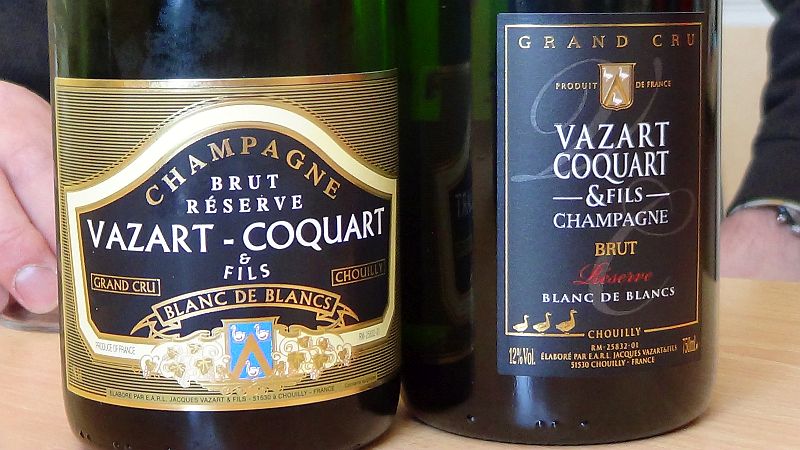
The picture below shows a major change made by one champagne maker in order to update the perception of his brand. The champagne inside the bottle has not changed, only the label.


Square or rectagular labels

On the left is the classic champagne label: it’s square and features quite a lot of gold, a colour that is often associated with prestige and opulence. The label is relatively large, the detail is cursive with curved, flowing lines and the coat of arms is quite prominent in the centre at the bottom centre of the label.

To my way of thinking the adjectives I’d immediately associate with the left-hand label are reliable, traditional, historical, ornate, perhaps even aristocratic. All these things were very much in keeping with the image that champagne promoted a few decades ago.

These days however, this style is considered to be a little outdated, although tradition still has an important part to play and should not be entirely discarded.

The right-hand label is intended to present the brand in a way that reflects the changing expectations of a new generation of consumers (and to some extent, to nudge consumers towards that new perception of the brand).

The right-hand label is rectangular, not square, taller and narrower than the older version. The predominant colour is black with only a few touches of gold. The lines are almost all straight, the coat of arms is still there (a nod to tradition) but is has been modified and is less prominent. Last but not least, in a slightly playful gesture, the three geese which, on the old label, were almost invisible within the coat of arms, have now been brought to one’s attention by making them gold on the black background.

Adjectives which spring to mind for the new version of the label are slick, understated, classy, serious and confident. The overall look is much more modern.

Another of the objectives of this change, especially the change of label shape, was to associate champagne more closely with wine rather than being treated as an entirely different category. This opens up champagne to a much wider audience of wine drinkers rather than specifically champagne drinkers.

In case you’re wondering, the geese device represents Chouilly, the village where the champagne is produced. Geese is the nick name given to the inhabitants of Chouilly.

Not one in 10,000 people would know this, but it arouses the consumers’ curiosity and prompts them to ask questions and that gives the champagne maker or the salesperson the ideal opportunity to talk about the brand and weave a cute and intriguing story around the brand. Storytelling is a well-known and ancient way to influence people.

Let’s look at a second example which is rather different and had different objectives

Customer specific targeting

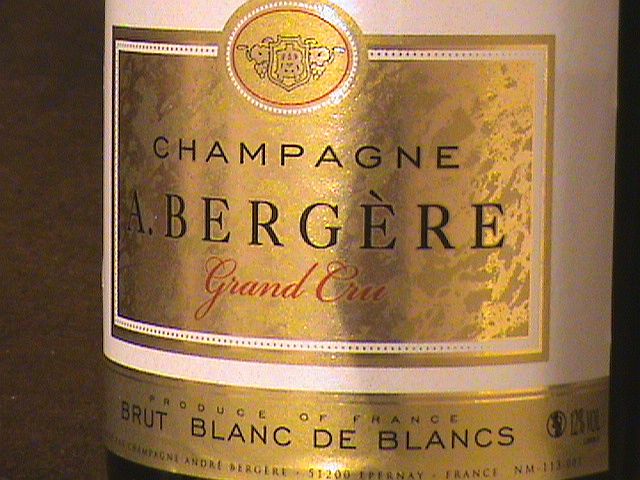
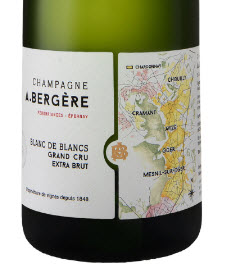
Here are two more contrasting labels on the same product from the same champagne maker. The first dates from 2016 and the second from 2024. I think you’ll agree that it’s a radical change: a revolution rather than an evolution.

As in the previous example, the older label in the first picture below is square, traditional and overwhelmingly gold. The imagery is firmly anchored in the imagery that champagne liked to advance a decade or so ago, although, in my opinion, this is a far more attractive label than the old label in the previous example.

Bergere label

This is my personal opinion with which you may not agree, but I don’t have the feeling that this label is very old-fashioned, and I don’t find the ‘in-your-face’ use of gold to be a problem in this instance.

Gold is still associated with wealth and opulence and several modern brands unashamedly use gold in their packaging – think of Ace of Spades champagne or many Prosecco brands – but there is a fine line to be drawn between opulence, which is positive, and ostentation which is negative. The difference between the two is mainly a matter of personal taste, or more relevantly, a matter of the taste of your target consumers.

Looking at the second example below, it seems clear that this champagne maker has made a strategic decision to set their sights on quite a different type of consumer and consequently to present their brand in a way that appeals to that new audience.

Bergere new label

The label is still square but the black dividing line down the centre gives the impression of two rectangular labels.

Hardly any gold to be seen, just a plain white background against which it is easy to read all the information and it’s that information about the champagne in the bottle – and above all the map of the vineyards - that best illustrates the intention behind this change of label.

Only consumers who have an above average interest in champagne would be attracted by this level of information and those are the consumers that this champagne maker has decided to target.

In doing so the brand is positioned as a wine that should be taken seriously. This is not just a champagne to drink at a party when hardly anyone pays much attention to what they are drinking. Neither is it a champagne that appeals as a gift item because of the bright gold label.

This is a champagne that offers a much deeper, more involving and more rewarding experience. and the information is provided to fully explain that the champagne maker’s priority is on the quality of the wine rather than just its appearance.

Of course, there is no doubt some more hard-nosed profit-driven thinking behind the change of label too. A high level of quality comes at a high price, but the consumers who are looking for this level of detail and more committed and will be prepared to pay higher prices.

To discuss labelling, or any other aspect of the creation and branding for your own private champagne label, send an email to This email address is being protected from spambots. You need JavaScript enabled to view it. and I’ll get back to you promptly.

All the best from Champagne

CHAMPAGNE BULLETIN MAY 2024

CHAMPAGNE BULLETIN MAY 2024


Hello and welcome to the first Champagne Bulletin for a few months. I hope you’ll forgive the gap but there has been little of real note to tell you about. Recently however a few articles have have caught my attention that i'd like to share with you.

Volume versus value

The figures for champagne shipment volumes in the year 2023 were released several weeks ago and showed a total of 299 million bottles - a drop of 8.2% compared to the 326 million shipped in 2022

Champagne shipments 1947 2023

Many figures in Champagne welcome these figures and called them a return to normality after three chaotic years between 2020 and 2022 which saw dramatic falls in shipments followed by equally sensational, and probably unsustainable, increases.

The drop in shipments in 2023 was felt across all three recognised producer categories but to a varying extent: Maisons (the big brands): down 8.2 % vs 2022, Cooperatives (down 16.1%) and Vignerons (the smaller independent producers): down just 2.5%

This might seem to be disappointing news for all concerned but when one looks at the value of those shipments, rather than the volume, the picture is quite different:

For the Maisons, the value of their shipments went up by 10.7 % to reach an average price per bottle of 23.41 euros.

For the Cooperatives, the same figures were: value up by 12.5% and an average price per bottle of 16.30 euros

And for the Vignerons the figures were: value up 7.8% with an average price per bottle of 16.25 euros.

These average prices are useful to anyone looking to purchase champagne – for example, anyone contemplating a private brand – but when looking at these average prices, please bear in mind that:

a) they are averages that inevitably hide large variations

b) they are ex cellars prices, not retail prices which will be several multiples high – typically 3 or 4 x higher depending on the distribution structure and taxation regime in the country in question.

c) they shoudn't be taken to imply that champagnes from the Maisons are intrinsically of 'better' quality that from the other two categories. The higher prices for the Maisons are probably due  to the fact that the Maisons are more skilled and more effective at marketing their brands.

These increases in average prices were driven partly by the necessity of passing on increases in the grapes price and of raw materials in general and more significantly by a deliberate policy of what is called ‘premiumisation’

Putting price up when sales are going down may seem to be contradictory and in many industries, it would be just that. However, it is always worth bearing in mind what the president of one of the major trade bodies in Champagne said recently:

Champagne is produced from a limited geographic area according to strict production regulations which simply do not permit us to sustain rapid increases in volume.

Given this background is it quite logical to pursue a high value strategy and one should not expect prices to come down anytime soon.

Where do the best sales opportunities lie?

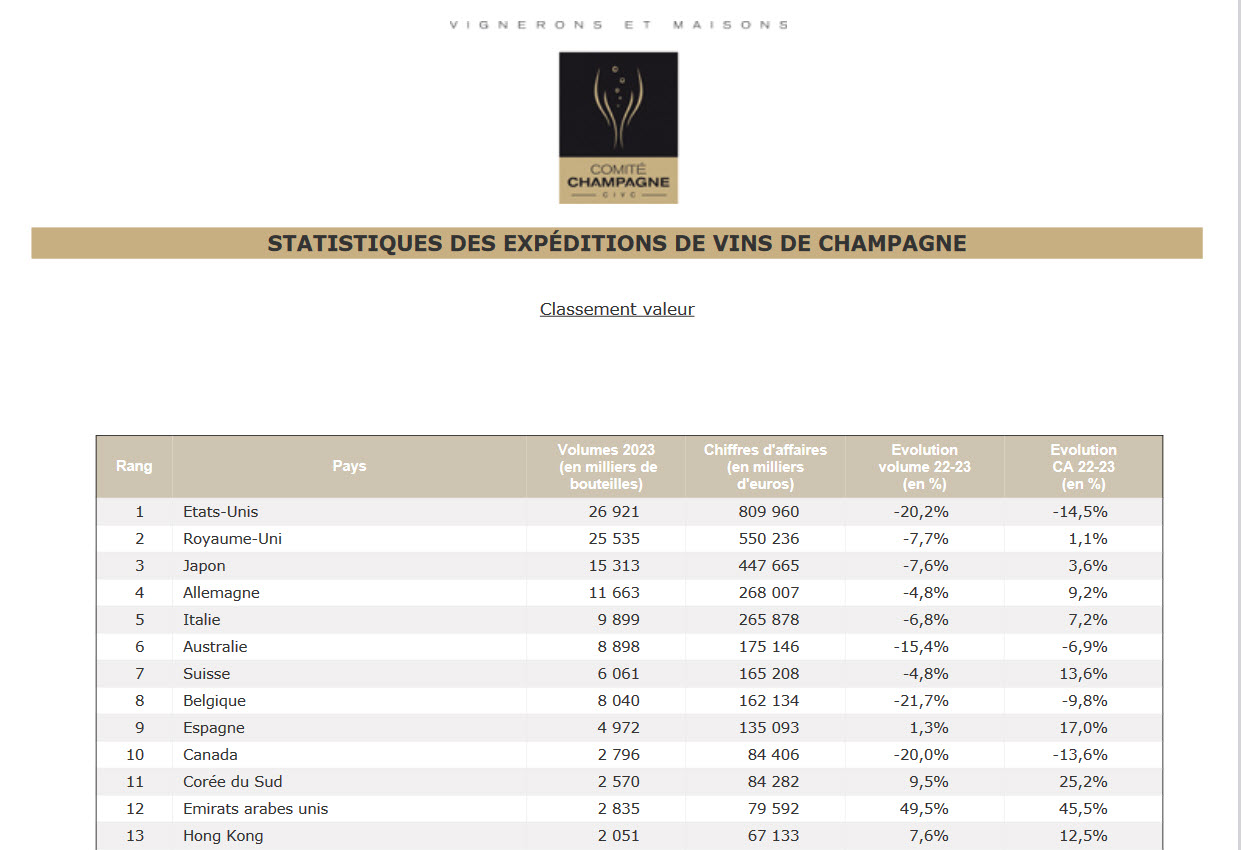
Extract from 2023 shipment figures

This is of course, the age-old questions that has no correct answer.

Is it the country with the greatest number of imports and where the value of imports is highest?

Is it in the countries that import only modest amounts of champagne but which may, in percentage terms at least, offer the biggest growth potential?

Then there are other things to consider such as political stability, population growth and many other factors. As Charles de Gaulle once apparently said in the  form of a very back-handed compliment

“Brazil is the country of the future… and always will be”

Whatever you own views may be, one essential consideration is to have some data on which to base one’s estimates and calculations and to help in your deliberations.

You can find the full 2023 shipment volumes and value for 150 countries  by clicking on this link.


Opportunities in Africa

For anyone assessing the market in Africa, a recent study by BusinessDay gives some useful data.

There are 5 principal champagne importing countries in Africa:

South Africa,

Côte d’Ivoire,

Democratic Republic of Congo,

Nigeria and

Morocco

However, shipments to Nigeria took a significant knock in 2023 – falling by more than 50% in fact – due to high inflation and devaluation of the currency. Nevertheless, there is clearly a demand in Nigeria and if the current economic issues are overcome one expects that shipments might rebound quite quickly.

Here’s a table showing the volume and value figures for the 9 leading champagne markets in Africa

Top 9 African markets for champagne 2023


Performance by style of champagne

 Over the course of 2023 a few trends emerged regarding shipments of the various styles of champagne

Unsurprisingly, brut non-vintage champagne – what the Champenois call BSA or Brut sans Année because it is a blend of wines from several different harvest rather than from just one harvest – fell 8.6%

Is this a disaster signalling a terminal decline in popularity for this style of champagne?

Not really, in my view. After all, BSA still commands 76% share of all champagne shipped and the slight decline in volume rather reflects a growing awareness amongst consumers that other styles of champagne exist and are worth trying and also due to an effort amongst producers to promote different styles that command a slightly higher price.

On the other hand, shipments of Rosé champagne fell by quite a significant 17.2 % in 2023

On the face of it that looks discouraging, but in fact shipments have only returned to the level they were at in 2019 before the three years chaos that followed. It might be more accurate to say that it was the boom in shipment of Rosé over the past few years that was the exception rather than the rule.

Shipments of what are called Prestige cuvées performed relatively well in 2023 : they fell just 6.1%  – a little less than BSA and Rosé but this is not surprising given the widespread efforts at premiumisation mentioned above.

(I have never met anyone who can give me a definition of a Prestige Cuvée, other than that it is more expensive and supposedly of better quality than the rest of the range. As far as I can tell there are no tangible criteria for a Prestige Cuvée and it can be whatever the producer says it is, so the term is not very helpful in my opinion).

In terms of the dosage, the results are a mixed bag

Overall shipments of low dosage champagnes decreased by 3.7 %, but in Italy and Germany shipments of the same style have seen a healthy increase.

In the UK and in Switzerland it was higher dosage champagne that saw the best gains.

Interesting as these figures are, I wouldn’t base my marketing strategy on just one year’s result. I suggest that it is far more relevant and revealing to study your target consumers and try to understand what they want. This can and does vary from one country to the next and even from one region or city to the next, but there’s no substitute to knowing your customers.

I hope you’ve enjoyed this round-up of news from Champagne.

If you have any questions or comments, or if you'd like to discuss a new project you are cnsidering, please email me at This email address is being protected from spambots. You need JavaScript enabled to view it.

All the best

Source : Comité Champagne unless mentioned otherwise.

CHAMPAGNE BULLETIN JANUARY 2024

CHAMPAGNE BULLETIN JANUARY 2024


A very Happy New Year to you. I hope it brings you health, happiness and success.

As you will know already, these bulletins are not about tasting notes, nor do they attempt to provide any recommendations about which champagne to enjoy. Instead, they focus on the business of champagne and some of the trends that may have an impact on the business environment and what that might mean for private brands.

Like almost everything else in the world, champagne is subject to cycles that flow one way and then another. These flows sometimes appear to indicate a clear trend, but on closer examination, the underlying influences can tell a more nuanced story.

With that said, In this first Champagne Bulletin for 2024 let’s take a look back on the past couple of years and to what 2024 may have in store for us.

The perpetual see-saw of supply and demand

SEE SAW

Unsurprisingly, 2020 was an unusual year for sales of champagne, as it was for everything else, with shipments collapsing to about 245 million bottles as opposed to the customary level of over 300 million bottles.

This led to a good deal of uncertainty and even pessimism about the future: would champagne ever recover and if so, when? At a crucial moment caution and pessimism prevailed, and with signs of a collapse in shipments already apparent in the first half of the year, it was decided to sharply limit the size of the harvest in September 2020 in order to avoid being overstocked and the consequent risk of prices collapsing.

The strategy appeared to work well because shipments in 2021 bounced back strongly and 322 million bottles were shipped. What’s more, the value of shipments reached a record of 5.7 billion euros.

Great news you might at first think and evidence that the right decisions were made, but as ever, there is another side to the story – demand is one thing but there is also supply to consider.

The harvest in 2021 turned out to be one of the most difficult in living memory. Grape growers were faced with just about every imaginable problem: frost, storms, heavy rain, diseases in the vineyards and more. The grapes that could be picked were of fair quality, but there were not many of them.

This left many champagne makers with a serious supply problem in 2022 after two consecutive small harvests; demand showed no sign of slowing, in fact the opposite was true, and shipments rose again to 326 million bottles.

Faced with this situation, champagne makers had hard choices to make:

No

Some simply discontinued sales to customers whom they considered to be of lesser importance;

Others implemented a system of allocation which restricted the number of bottles each customer could order;

Many followed the lead of the major brands who took the opportunity to raise prices as part of a strategy of ‘premiumisation’.

This worked well and the value of shipments reached over 6 billion euros for the first time ever.

All these things had a significant impact on the private brand market because several champagne makers abandoned this business channel for lack of available bottles.

The wheel starts to turn again

Everything that goes up must come down and nothing stays the same for ever. In 2023 we saw what may be the start of another turn of the wheel.

First, the harvest in Autumn 2022 was excellent in terms of both quality and more importantly in terms of quantity. This, together with other measures to help champagne houses to rebuild their reserves, will ease the supply issue, but we are not yet out of the woods just yet because the wines from the 2022 harvest will not be available to sell for a few years yet.

In parallel to gradual easing of supply, sales are also showing signs of a downturn. We are still awaiting the official figures for shipments for the full year in 2023, but the figures up until October 2023 show a fall of 8.6 % versus 2022 and a moving annual total over 12 months of 304 million bottles – not a disaster by any means, but a distinct fall versus the previous year.

As time goes by the reasons for the recent trends becomes clearer.

It now appears that the high level of shipments in 2022 was due in part to the fact that importers around the world were re-stocking again after their warehouses had been all but emptied in 2021. Indeed, the importers probably over-ordered in 2022 just to be sure that they could get their hands on much-needed stock. They now find themselves with more than enough and therefore orders and shipments have slowed down, although actual consumption may be stable.

What’s more, the increase in interest rates over the past year or more means that importers are much more cautious about managing their funds and decided in 2023 to delay or reduce orders where possible.

Rising prices

Another obvious component in the discussion is the rising price of champagne which we referred to above. It seems reasonable to assume that this is having some negative impact on consumption and if this is true it might indicate that there is a limit to the ‘premiumisation’ strategy used primarily, but not exclusively, by the major brands.

However, even as supply eases over the next few years it is hard to imagine that the recent trend towards higher prices will change any time soon.

Why not? One need look no further than the price of grapes in Champagne which is once again on the rise  - by approximately 40 centimes per kilo in 2023. The price varies quite significantly across the many regions that make up the appellation Champagne and can vary between as much as 8.50 euros per kilo for grapes from the most prestigious Grand Cru villages and 7.50 euros per kilo for grapes from less famous villages*. Bearing in that it requires 1.176 kg of grapes to make every 75cl bottle of champagne, (and that’s before the grapes have even been pressed, let alone anything else) it’s easy to see where the high price of champagne comes from.
Big bunches reduced

The grapes growers also face higher costs due to the increasingly widespread adoption of more environmentally sound practices – all of which have an additional cost attached to them – and to the extremely high cost of vineyard land in Champagne.

* these are the prices on the open market. The price calculation of grapes from one's own vineyard, is different

So where does all this leave us and what lies in store in the next few years, particularly for anyone considering launching a private brand?

First the positive news: my impression is that some champagne makers who, two years ago would not consider releasing stock for a private brand, may be ready to look at this market once again.

The less positive news is that prices will continue to rise.

The total area of Champagne is limited and despite the frequent discussions about expanding the appellation, nothing significant has yet been implemented, or is likely to be in the near future. Accordingly, as things currently stand, production has an absolute limit of about 350 million bottles. We are not at that level yet, but not too far from it. This will inevitably put upward pressure on prices.

Equally, it is unrealistic, in my view, to expect production costs and land prices to do anything but steadily increase and this too will tend to push prices of champagne upwards.

Last but not least, I don’t see established brands abandoning their premium-price strategy and where the big brands lead, others will follow.

Consumer demand

Champagne consumptionOn the demand side, the are signs of that some consumers are reducing the frequency of their champagne purchases and, in some cases, changing to other sparkling wines entirely– one only has to look at the plethora of sparkling wine brands on the market and their almost ubiquitous distribution to appreciate that champagne faces serious and growing competition amongst a certain segment of consumers.

Sparkling wine is one of the only categories of wine to see growth in the past few years. This is especially (but not only) true in the USA because, according to INTEL

“sparkling wine is no longer limited to celebratory occasions in the US. As a result, the segment’s share of the total wine category in the country has grown steadily over the last decade, from 5.4% in 2013 to 7.4% last year.

During the same period, the US went from annual sales of 17m nine-litre cases of sparkling wine to over 26.5m cases.”

https://drinks-intel.com/wine/sparkling-wine-in-the-us-in-2023-market-intel/

However, in my view, this is good for the image and sales of champagne because there is a constant stream of new sparkling wine consumers who, in all probability, will want to try champagne sooner or later.

I also believe that it will be hard if not impossible for other sparkling wines to displace champagne’s image as preeminent in terms of quality and prestige and thus a strong aspirational demand for champagne will always be there.

To comfort me in this view research carried out by Future Market Insights forecasts that the value of champagne shipments will reach 11.2 billion euros in 2032 with an annual compound growth rate of 5.08%

In summary, I remain cautious optimistic for the champagne category as a whole in the next few years and also for the private brand market, not only because it will gradually become easier to find suppliers, but also because consumer demand is growing, prices are rising and the potential for attractive profits remains.

Until next time

Jiles Halling

CHAMPAGNE BULLETIN OCTOBER 2023

CHAMPAGNE BULLETIN OCTOBER 2023

Looking back on the 2023 harvest

You may well have read several reports already about this year’s harvest in Champagne, but the few weeks that have passed since picking and pressing stopped may allow us to get a more complete assessment of the situation and I would say that the verdict is that what promised to be an exceptional year has come up just a little short.

It was a year of contradictions: overall a good vintage, but perhaps not a great vintage.

No solutions, just trade-offs

The weather up until August was fairly benign with no unusual bouts of frost nor any problems with disease in the vineyards. However, August was warm, wet and humid: perfect conditions for rot to set in and this soon became a major concern that threatened to get worse with every passing day.

Pourriture 2

Any bunches affected by rot should not be picked because they can give an unpleasant taste to the juice off the press so, widespread rot means that picking has to be done very carefully to leave out rotten bunches, but this takes more time and, as in so many instances, more time taken to harvest means higher costs, so there’s a trade-off to be found between quality and cost.

The start dates for the harvest were fixed for the first week, or so, of September – the exact date varying from village to village and from one grape variety to another. By this time much warmer weather had arrived which usually means that the sugar level in the grapes (and therefore the potential alcohol) would increase quickly, but this didn’t seem to be happening and the sugar levels were only creeping up slowly.

This presented another dilemma for the wine makers: should they wait a few days longer to allow the sugar levels to rise, or should they pick as soon as possible before rot caused more damage to the crop?

In general, those who decided to harvest sooner rather than later came off better, not least because even for those who waited a few days more, the sugar levels never really got up to 100 which is what would normally be expected.

Usually, this low sugar level would mean that the level of acidity in the grapes, which has an inverse relationship with the level of sugar, would remain fairly high, but somewhat strangely, this year the level of acidity also remained quite low.

Great Champagne always needs a good degree of acidity and of sugar and so the combination of lowish levels of both sugar and acidity could be problematic, but this could turn out to be a blessing in disguise.

The lowish levels of sugar remind some people of the harvests that were common some 15 or 20 years ago which would be no bad thing give the high quality of some of the vintages from that period.

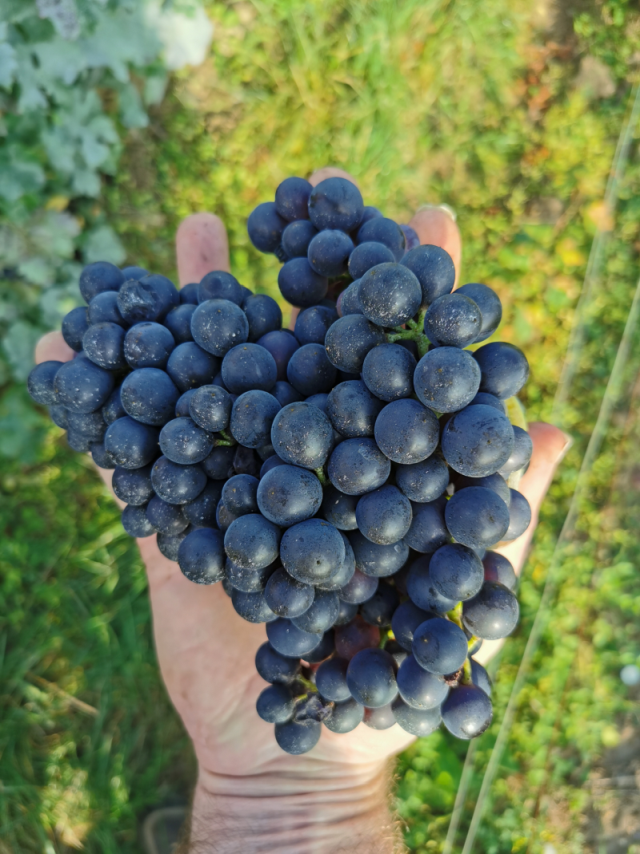
On the positive side, it was a big harvest with the vines fully laden and what’s more, the weight of the bunches was unprecedented with some being as much as 1 kg (2.2 lbs). In theory that should mean more juice from which to make champagne, but the problem with rot meant that not every bunch could be picked so the final yield was not as large as had seemed likely a few months ago.

Chardonnay


Big bunches reduced

Another positive measure was the announcement that amount of wine that is allowed to be put into reserves was increased. This is especially important at the moment because stocks have been run right down over the past couple of years as a result of small harvest in 2020 and 2021 coupled with strong increases in sales.

In addition, the relatively low levels of acidity may mean that the champagnes from 2023 will not need quite so many years ageing in the cellars and so will be ready for sale sooner rather than later.

In the days and weeks following the harvest, the first job is to carry out the first alcoholic fermentation that turns the grapes juice into still wine. It’s important that the fermentation takes place slowly and steadily because that preserves the full breadth of aromas in the wine. Normally fermentation takes about 2 weeks to complete but some reports indicate that this year the fermentation was more rapid than usual for reasons which are not entirely clear.

Nevertheless, some vignerons are saying that this year’s wines are very aromatic, so once again we have something of a contradiction at play.

Inox vats

The lowish levels of sugar remind some people of the harvests that were common some 15 or 20 years ago. Who knows if this trend will continue? It seems unlikely given that average temperatures have risen noticeably over the past 15 years or more, but only time will tell.

Other issues

On the subject of rising temperatures, a lot of attention was given, not unsurprisingly, to the fact that at least 4 grape pickers died in the vineyards due to the heat which was well above 300C on some days during the harvest.

I imagine that this will lead to earlier starts for pickers in the morning and perhaps even to harvesting at night.

Also in the news in Champagne were stories about the working conditions for the harvesters, which in some cases were reportedly appalling.

Some 100,000 people come to Champagne each year to take part in the harvest and this puts a huge strain on the local infrastructure. Many travellers come to earn money doing the harvest and it’s a common site to see groups of caravans parked on any spare piece of ground.

Picture1

In past times, pickers were often housed and fed by the champagne makers and this is still true in some cases, and the traditional end-of-harvest meal called 'Le Cochelet' is an experience not to be missed, but stricter regulations about the standard of accommodation led to many champagne makers having to abandon the idea of housing the pickers because the cost of upgrading the facilities was too great.

Tissier meal

In principle, this improvement in standards was a good move designed to make life easier for the grape pickers however, with fewer pickers being lodging ‘in-house’, more of them need somewhere else to stay and that means even more caravan and camping sites where conditions are not good, to say the least.

To make matters worse there have been many allegations of so-called ‘gang-masters’ recruiting workers from outside France and exploiting them in all manner of ways.

The majority of champagne houses are very responsible and pay their pickers decently, but unfortunately there are almost a few ‘bad apples’.

In any event, conditions were said to be so bad in some cases that the story hit the local and national press with the result that an inquiry was set up which should see things much improved for next year.

Thank you for reading this bulletin from Champagne and do come back again next month for more news.

Until then,

All the best

Jiles