I wrote this reply in response to an article that recently appeared in Euromonitor suggesting that there are hard times ahead for champagne
http://blog.euromonitor.com/2014/07/champagne-and-problems-bubbling-beneath-the-surface-post-recession-sales-declines-and-sparkling-win.html
Read the article on the link above then read my reply below and finally please let me know which side of the argument you come down on
All the best from Champagne,
Jiles
---
It is undeniable that sales of champagne have been sluggish for a number of years , however I do not share your pessimistic view of the future for champagne and in my view almost all the points you raise can be interpreted in the opposite way to that which you put forward.
The economic picture:
You state that the recent sales of champagne in France are “an ominous reflection of the collapse in consumer confidence and discretionary income in the country. “
I agree ( apart from the use of the word ‘ominous’ which is, I suggest, a subjective interpretation), but there is nothing in this statement to suggest that champagne per se has lost its appeal and no reason, based on the argument you put forward, to assume that, as has happened time and time again in the past, a better economic environment will not result is more buoyant sales of champagne.
It is also correct to say that the majority of champagne sales are made in Western Europe, but on what basis do you describe this area as being “terminally depressed”?
Without wishing to belittle the difficulties still faced by many economies in Europe and the undoubted shift towards Asia Pacific it is a considerable leap from there to the acceptance that the economic climate in Western Europe will never improve and therefore that sales of champagne will never improve. Furthermore it’s a leap for which no evidence is provided in the article.
Volume or Value
Let’s look at some of the other challenges facing champagne:
It’s true that sales of sparkling wines other than champagne are increasing strongly, Prosecco probably being the being the obvious example. You mention that, according to Euromonitor, the growth rate for champagne in “2013-2018 is expected to be 1%. Other sparkling wines will see double that.” However, is competing for sales volume really where champagne makers should be focussing their attention?
Of course champagne producers would like to see more robust growth, but champagne is and I believe will remain, the pre-eminent sparkling wine of the world and rather than obsessing about sales volume I think there is an equally credible argent that says champagne should accept a slower growth rate than other sparkling wines and concentrate on generating value for both consumers and producers alike.
Yes there are many excellent sparkling wines being made in other regions of the world, but none of them come even close to the brand imagery and positioning of champagne which has been acquired over the course of 250 years thanks, in great part, to the work of the CIVC despite, as you correctly point out, some periods of complacency.
If one takes the case of Prosecco: the biggest threat to champagne in terms of volume, it is not made in the same way as champagne, it is not made from the same grapes, it does not have the same taste as champagne and it is certainly not sold for the same price as champagne. The main thing is has in common with champagne is that it they both have bubbles and people like to celebrate with bubbles.
It is a perfectly tenable argument, in my view, to say that when people have sufficient disposable income, whether they be in Western Europe, New York or Shanghai, they will want to celebrate with the most prestigious bubbles they can buy and that means champagne.
To abandon the ‘elitist positioning’ which you suggest is a point of weakness, in favour of chasing volume would, I suggest, be a short term fix and a catastrophic error of judgement in the longer term.
Adversity leads to Innovation
I don’t want to give the impression that I believe that the champenois can simply rest on past glories and smugly assume that all will be well and that no changes are required, far from it, but to suggest that this is what is actually happening would be a gross misrepresentation of what is going on in Champagne.
You talk of ‘rigid conservatism’ in Champagne and it is true that it is a region steeped in tradition where things change slowly – admittedly too slowly sometimes, but the champenois are very well aware of ‘the facts’ as regards sales volumes and the many other facets of the world wine trade and things are changing. Indeed you mention quite a few examples of innovation in your article.
Are these new ideas all perfect?
Probably not.
Will one or more of them turn out to be the key to reviving sales?
Again probably not, but they are indicative of a level of innovation and can hardly be described as ‘rigid conservatism’.
It’s my belief that what you will find bubbling under for champagne are lots of exciting times rather than doom and gloom.
A note of caution
Whilst I can’t agree with the second half of M. Taittinger’s quip that champagne’s greatest threat comes not from other sparkling wines but from Viagra, I do think he has a point in the first half of his statement.
Far more worrying than the threat from other sparkling wines would be a trend towards beer and spirits and away from wine which seems to be what is happening in the USA according to a recent Gallup survey. That would be a far more difficult trend to counter, but it is a debate for another day.




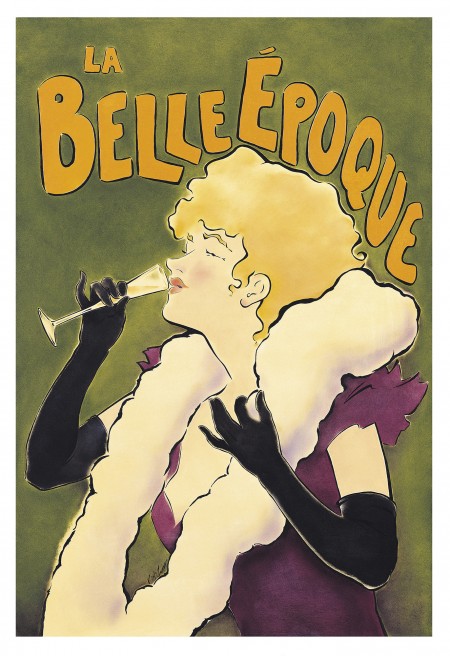 There’s a lot of talk at the moment about Champagne being in crisis: sales are in decline and other sparkling wines are grabbing some of the limelight, but it’s not the first time that champagne has faced a few challenges as a look back at the history of the past 100 years or so will show us. It’s a fascinating story of highs and lows, of war and peace, of the early dominance of the Grandes Marques and the rise of cooperatives and Grower Champagnes.
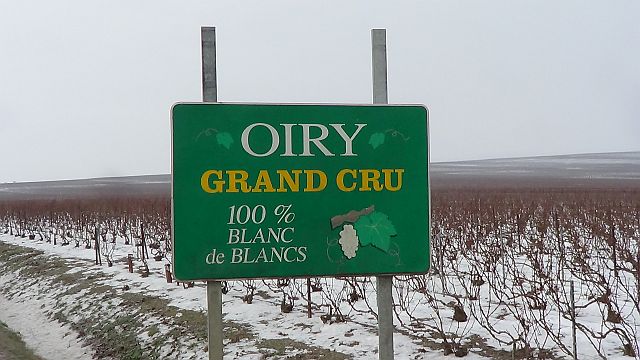 If you see the words Grand Cru or Premier Cru on the label of a bottle of champagne it’s very likely that you will assume that what’s inside the bottle is of a superior quality to a champagne that does not display either of these terms. Over the years the terms have become popular as easy-to-understand reference points for quality, but ( I‘m sorry to have to tell you this) since 2010 neither Grand Cru, nor Premier Cru has existed officially in Champagne.
 Whether you like them or hate them, find them useful or useless, it is hard to deny that over the past 20 years or so the medals and scores given to wine by some recognised authorities have had a significant impact on the sales of the wines in questions, but what of the future? Will Parker points’ continue to be influential and of not, what, if anything will replace them?
 April is Champagne is becoming something of an institution.